
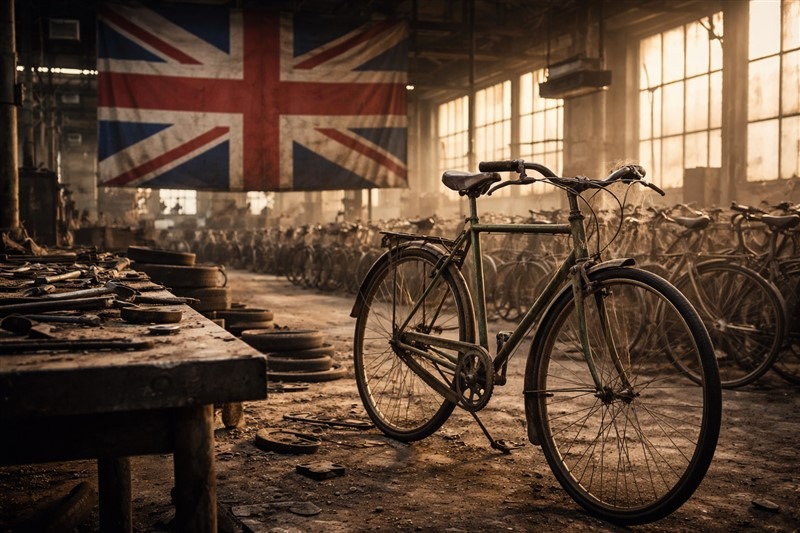
What Happened to the UK Cycling Industry?
Introduction: A Proud Heritage in Peril
For more than a century, Britain was synonymous with serious bicycle production. Names like Raleigh, Chater-Lea and Dawes once led global markets with innovation, craftsmanship and industrial scale. But today, much of the UK’s bicycle manufacturing industry has faded from prominence. Understanding this decline requires analysing economic shifts, globalisation, technological changes, and evolving consumer demand. In contrast, several British cycling brands continue to thrive or reinvent themselves, showing that while mass manufacturing has declined, niche and high-end segments remain vibrant.
In this article, we explore:
- The historical evolution of the British bicycle industry
- Key reasons for its decline
- The emerging landscape of UK cycling brands
- A snapshot of companies still performing well
- Key learnings for the future of UK bike makers
The Historical High Water Mark of UK Bicycle Production
The Early Century Legacy
In the late 19th and early 20th centuries, Britain was a powerhouse of bicycle manufacturing, with factories across the Midlands and North: Coventry, Birmingham and Nottingham were centres of engineering excellence. Entrepreneurs such as William Chater-Lea and companies like Raleigh built not only bicycles but entire ecosystems of parts, skills, and industrial capacity.
Raleigh: A Case Study of Industrial Dominance and Decline
Raleigh remained the largest bicycle manufacturer in Britain through the mid-20th century. At its peak, the Nottingham factory employed over 8000 people and produced two million bikes annually. However, the company struggled to modernise production and adapt to global competition. By the 1980s, it began outsourcing production to Taiwan, a turning point marking the end of large-scale domestic bicycle assembly under the Raleigh name.
Why the British Bicycle Industry Declined
Globalisation and Offshore Manufacturing
As Japanese and then Taiwanese manufacturers mastered lightweight frame production and components, British companies failed to match the economies of scale or cost efficiencies. Component makers like Sturmey-Archer, once a hallmark of British engineering, became obsolete in the face of derailleur-based systems from Shimano and Campagnolo.
Deindustrialisation and Loss of Skills
British regional industrial clusters deteriorated as firms shut factories or shifted production abroad. Supporting trades — tube rolling, custom frame building, and wheelmaking — also declined. With fewer apprenticeships and fewer skilled workers, the capability for large-scale bike manufacturing eroded.
Brand Hollowing and Identity Dislocation
By the 1990s and 2000s, many iconic British bicycle brands existed mainly as labels, with products manufactured overseas and imported into the UK. While this preserved brand names, it hollowed out domestic manufacturing capacity.
Market Shifts: E-Bikes & Stagnation
Recent data suggests the UK market is facing stagnation. Bicycle sales fell to record lows in 2023, the lowest annual figures since the 1980s. Mechanical bike sales dropped by 5%, and e-bike sales fell 7%, significantly lagging behind other European markets. Higher e-bike prices, lack of government subsidies, and cost-of-living pressures are cited as key causes.
Brexit and Trade Frictions
Brexit introduced new trade barriers and red tape, increasing costs for UK cycling manufacturers and component suppliers. While not unique to Britain, these effects compounded existing challenges and reduced export potential.
The Current UK Bike Market: Challenges and Opportunities
Despite the structural decline in traditional manufacturing, the UK bicycle industry still contributes billions to the economy, sustaining tens of thousands of jobs and generating significant tax revenue. However, the market remains fragile and competitive, with inventory overhang, stagnant demand, and shifting consumer priorities weighing on growth.
British Market Trends
- Falling bicycle sales and flat e-bike uptake compared with continental Europe
- Supply chain excess and discounting across major brands
- Government support is repeatedly sought by industry bodies
These trends underscore not just the decline of production, but the broader challenge of maintaining cycling as a strong domestic market.
UK Cycling Brands That Are Doing Well Today
While traditional manufacturing has dwindled, several UK cycling brands remain relevant, innovative, or profitable. Some have adapted by focusing on niche markets, design excellence, or export-oriented strategies.
Table: Notable British Cycling Brands (2026)
| Brand | Focus | Status Today | Notes |
|---|---|---|---|
| Brompton Bicycle | Folding bikes | Still operating | Despite recent profit declines, remains globally recognised |
| Condor Cycles | Custom & heritage bikes | Active | Bespoke bikes with historic racing pedigree |
| Pashley Cycles | Classic & premium bikes | Active | One of the longest manufacturing legacies in UK |
| Factor Bikes | High-end performance bikes | Active | British brand with global racing credentials |
| Vitus (UK) | Road & mountain bikes | Active | Part of a recognised UK brand portfolio |
| Saracen Cycles | Mountain & off-road bikes | Active | UK brand owned by Madison |
| Quirk Cycles | Boutique & bespoke frames | Growing | London-based small manufacturer backed by Rapha founder |
Brompton: British Design, Global Identity
Brompton remains one of the most internationally recognised British bicycle brands. Known for its iconic folding bikes, it has maintained design and some production in the UK, but has faced recent profit declines and a drop in domestic sales amid industry turbulence.
Condor Cycles: Heritage Meets Craftsmanship
Founded in 1948 in London, Condor Cycles builds bespoke and recommended bikes for road racing and touring. Its heritage and connection to professional riders help sustain brand relevance.
Pashley: Traditional British Manufacturing
Pashley Cycles, based in Stratford-upon-Avon, remains one of the UK’s longest-running bicycle manufacturers, producing classic and utility bikes with a focus on quality and British production.
Factor Bikes and Vitus: Performance & Innovation
Contemporary British brands like Factor Bikes (based in Norfolk but with international production partnerships) and Vitus continue to make waves, particularly among performance and enthusiast communities.
Saracen Cycles: Mountain and Trail Bikes
Saracen produces mountain and off-road bikes internationally while retaining strong UK distribution and brand heritage.
Quirk Cycles: Boutique Investment and Craft Focus
Quirk Cycles is an example of a boutique UK bike maker gaining traction, especially among enthusiasts seeking bespoke craftsmanship and design, backed by investment from cycling industry figures.
Why Some Brands Thrive While Others Struggle
Niche Positioning vs Commodity Competition
Brands that focus on unique positioning — whether folding bikes, high-end performance, or bespoke craftsmanship — tend to hold value even in a challenging market. Generic mid-market manufacturing struggles because it competes directly with large global producers with greater scale.
Export Orientation and Global Demand
Brands that export or sell premium products internationally, like Brompton and Factor, are insulated somewhat from the weak UK domestic market.
Brand Heritage and Storytelling
Brands with history and identity (e.g., Condor, Pashley) benefit from strong narratives that engage enthusiasts and collectors.
What the Decline Means for Cycling Culture in the UK
The shift away from British bicycle manufacturing is not just an economic story — it reflects broader changes in mobility, urban planning, global production networks, and consumer behaviour. Yet cycling culture in the UK remains vibrant, driven by communities, sportive events, bike clubs, and urban cycling initiatives. The challenge for the industry is aligning domestic production and innovation with these cultural trends.
Outlook: Can British Bike Manufacturing Rebound?
While large-scale manufacturing may never return to its mid-20th-century prominence, there are pathways for resurgence:
- Government support for domestic production and innovation
- Incentives for e-bike adoption (similar to European subsidies)
- Investment in advanced manufacturing and technology
- Collaboration between local designers, engineers, and global partners
The success of boutique and high-end UK brands suggests there will always be room for innovation and creativity. The future of cycling in Britain may be less about quantity and more about quality.
Conclusion
The decline of the British bicycle manufacturing industry is a story shaped by globalisation, structural economic change, market dynamics and shifting consumer demand. Although many historic brands no longer build bikes in the UK, a vibrant ecosystem of niche bike makers, performance brands and heritage manufacturers continues to thrive.
British cycling culture remains strong — and there is room for renewed industry innovation if stakeholders invest in strategic support, technology and global positioning. Whether you are a cycling enthusiast, industry observer or eco-mobility advocate, the story of UK bicycle manufacturing highlights both the challenges and opportunities ahead.